
Functional programming is all about functions, right? Using a recursive function is the correct approach. Or is it? The more you program in Haskell, the more you realize that you get the most power by considering wholesale transformations of data structures. When creating a Map of pieces, I didn’t write a recursive function over a list — I used a fold instead. Of course, behind the scenes, fold is implemented using recursion (which, thanks to tail recursion, is usually transformed into a loop). But the idea of applying transformations to data structures is what lets us soar above the sea of details and into the higher levels of abstraction.
Bartosz Milewski, https://bartoszmilewski.com/2017/12/29/stalking-a-hylomorphism-in-the-wild/
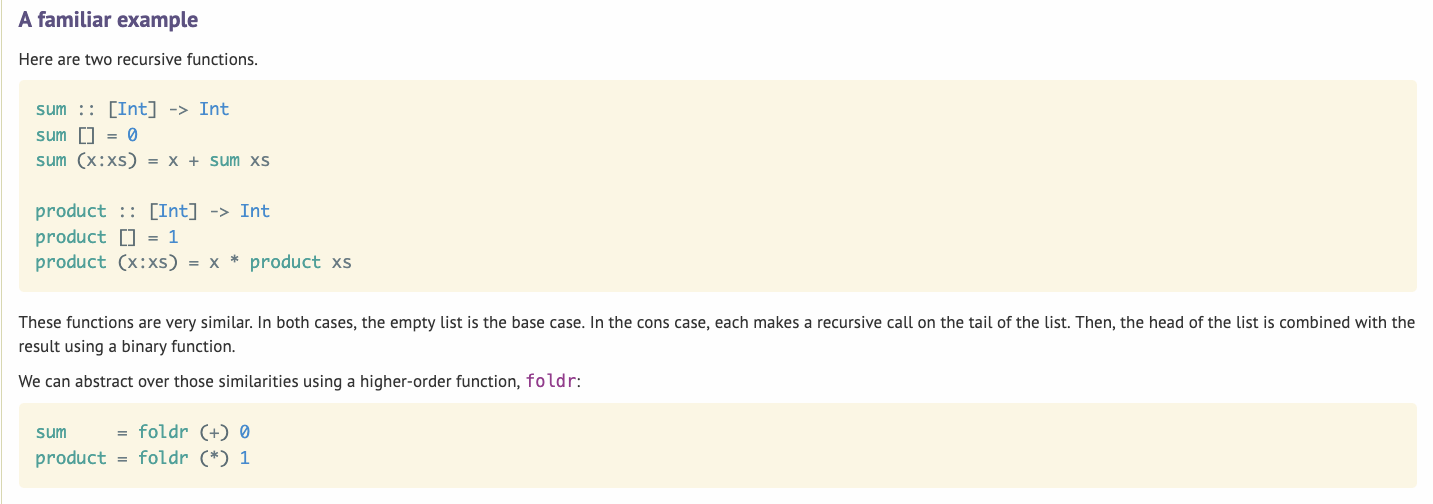
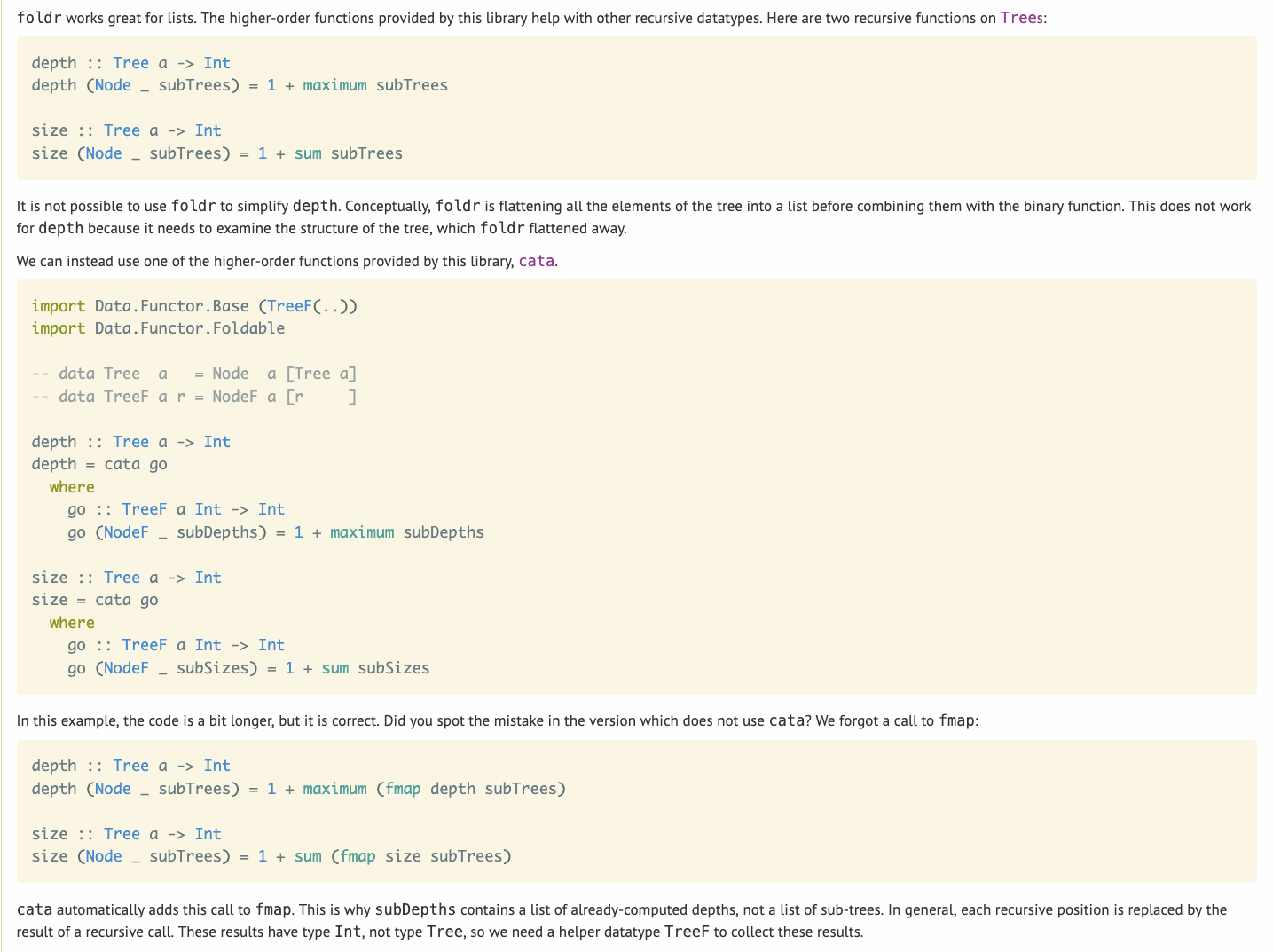
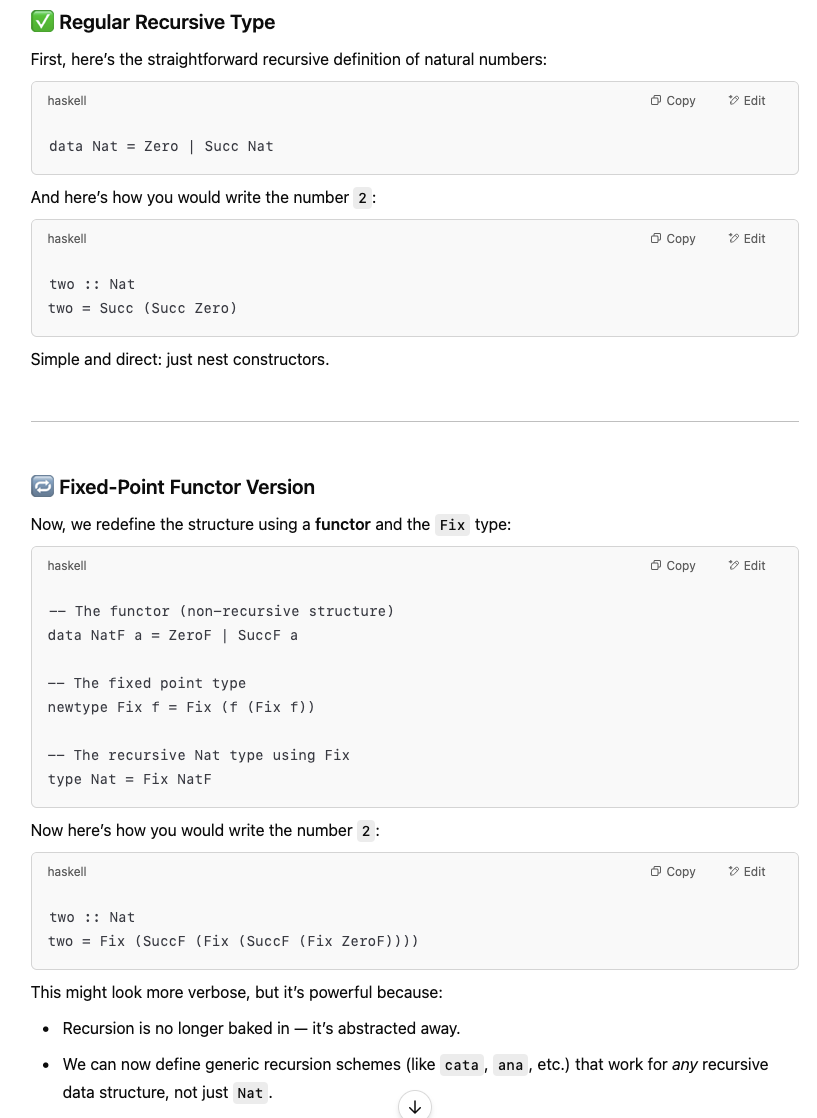
Many recursive functions share the same structure, e.g. pattern-match on the input and, depending on the data constructor, either recur on a smaller input or terminate the recursion with the base case. Another one: start with a seed value, use it to produce the first element of an infinite list, and recur on a modified seed in order to produce the rest of the list. Such a structure is called a recursion scheme. Using higher-order functions to implement those recursion schemes makes your code clearer, faster, and safer.
https://hackage.haskell.org/package/recursion-schemes-5.2.3#readme